
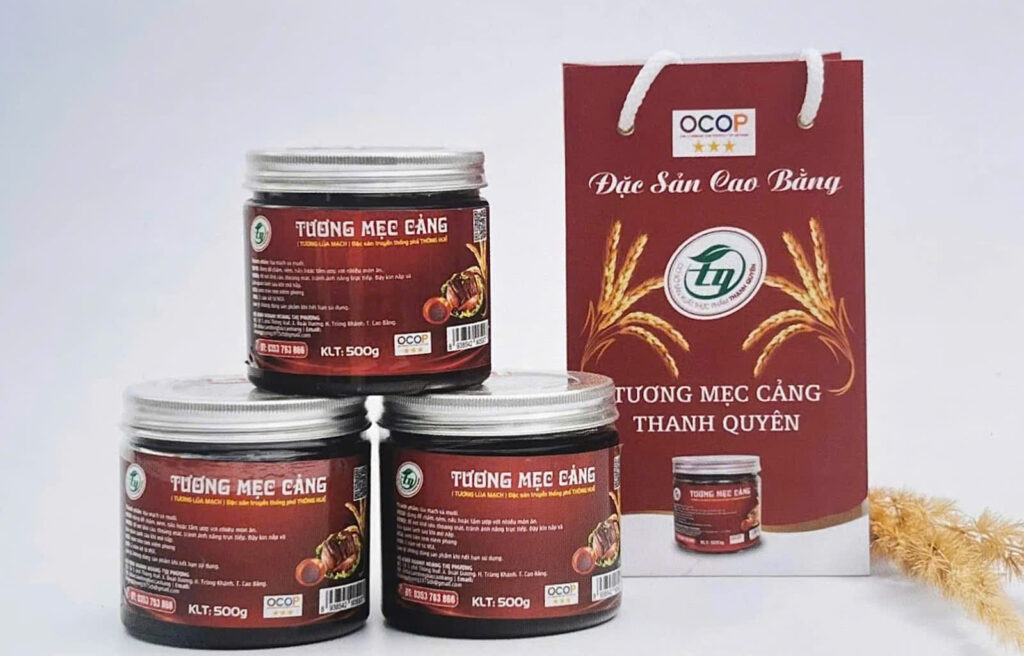
Phố Thông Huề vẫn giữ được nghề truyền thống nhưng chỉ còn gần 2 chục hộ làm tương chuyên nghiệp. Tương ở Thông Huề được chế biến từ nguyên liệu lúa mì có vị ngọt và thơm rất đặc biệt. Để có được vị ngọt dịu và thơm, người dân nơi đây phải chế biến rất công phu và nhiều thời gian với công thức do tổ tiên truyền lại
Đầu tiên, chọn nguyên liệu và tạo bánh. Người làm tương phải chọn loại lúa mì mẩy hạt, sàng sẩy sạch, phơi khô, sau đó đem xát thành bột. Hòa bột vào nước sôi nhào đều và nặn thành từng bánh tròn đường kính khoảng 20 cm. Sau đó, đun nước sôi rồi thả bánh đã nặn xuống, đợi đến khi bánh chín nổi lên thì đem phơi nắng.
Dùng lá ngải đắng về ủ khoảng 3 – 4 tối cho bánh mốc xanh, sau đó phơi khô cho đến khi bánh có mùi thơm của lúa mì và đem về rửa sạch cho hết phần mốc xanh. Đến công đoạn ngâm muối: Bánh tương đun nước muối và lọc sạch. Bánh sau khi phơi bẻ từng miếng nhỏ rồi cho vào nước muối đã lọc ngâm khoảng 15 – 20 ngày cho bánh mềm rồi đem ra phơi nắng trong 5 – 6 ngày cho khô, thơm và vàng. Tiếp theo, mang bánh đã phơi đem đi xát thành bột đặc.
Đến công đoạn đánh tương: Bánh tương xát thành bột đựng vào trong chậu hoặc xô rồi mang ra phơi nắng, đánh đều tương từ dưới lên sao cho các lớp tương được hấp thụ đủ ánh nắng. Công đoạn đánh tương rất quan trọng bởi nếu chưa thuần thục sẽ làm tương ăn không thơm ngon. Trong quá trình làm tương, chỉ cần đảo một lần vào buổi sáng nếu không tương sẽ bị chua. Sản phẩm tương làm ra phải có màu nâu đậm, sánh, dịu, có mùi thơm ngọt, bùi.
Nguồn: CSSX Bánh khảo Thanh Quyên
Ảnh : CSSX Bánh khảo Thanh Quyên
Thong Hue Street still preserves its traditional craft, but only about 20 households still make soy sauce professionally. The soy sauce in Thong Hue is made from wheat flour and has a very special sweet and fragrant taste. To achieve this mild sweetness and aroma, the locals have to process it meticulously and for a long time using a recipe passed down from their ancestors
First, select the ingredients and make the dough. The maker must choose plump wheat grains, sift them clean, dry them, and then grind them into flour. Mix the flour with boiling water, knead well, and shape into round cakes about 20 cm in diameter. Then, boil water and drop the shaped cakes in. Wait until they float to the surface, then dry them in the sun.
Bitter mugwort leaves are used to incubate the cakes for about 3-4 nights until they turn greenish, then they are dried until they have a fragrant wheat aroma. Finally, they are washed to remove all the green mold. Next comes the salting process: The cakes are boiled in brine and filtered. After drying, the cakes are broken into small pieces and soaked in the filtered brine for about 15-20 days until they soften. Then, they are dried in the sun for 5-6 days until they are dry, fragrant, and golden. Finally, the dried cakes are ground into a thick paste.
Next comes the process of stirring the soy sauce: The soybean paste is ground into a powder, placed in a basin or bucket, and then sun-dried. The paste is stirred evenly from the bottom up, ensuring that all layers absorb enough sunlight. This stirring process is crucial because if not done skillfully, the soy sauce will not taste good. During the soy sauce making process, stirring only once in the morning is necessary; otherwise, the soy sauce will turn sour. The finished soy sauce should be dark brown, thick, smooth, and have a sweet, savory aroma.
