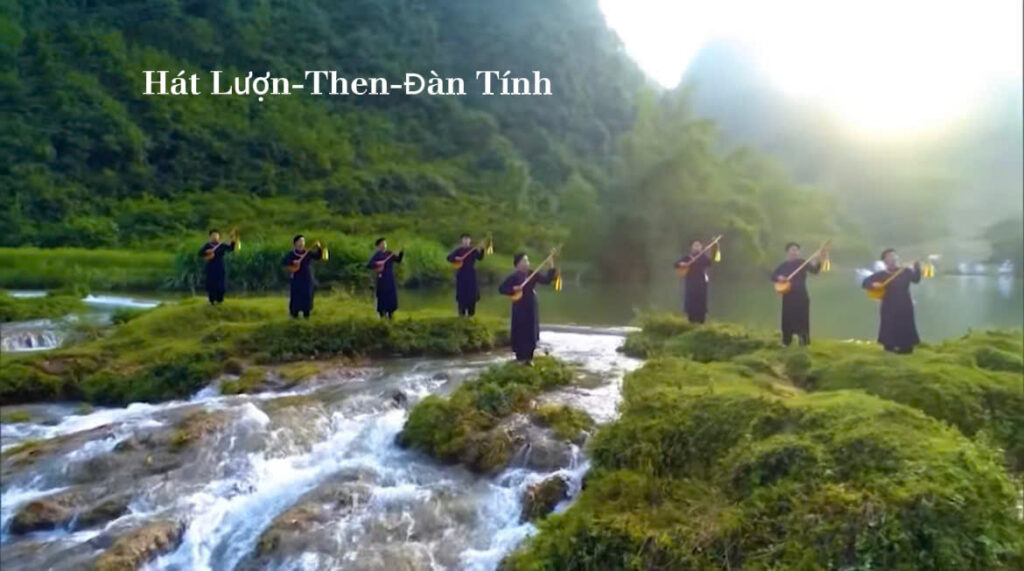
Hát lượn then phong slư là một loại hình dân ca đặc sắc của đồng bào dân tộc Tày, Nùng ở vùng núi phía Bắc Việt Nam, đặc biệt phổ biến ở Cao Bằng. Đây không chỉ là hình thức ca hát giao duyên mà còn là nét đẹp văn hóa truyền thống gắn với đời sống tinh thần của người dân nơi đây
“Lượn” là cách hát đối đáp nam nữ, còn “then” là hình thức hát mang màu sắc tín ngưỡng, thường có tiếng đàn tính đệm theo. “Phong slư” nghĩa là những bức thư tình gửi gắm tâm tư, tình cảm. Vì vậy, hát lượn then phong slư thường thể hiện tình yêu đôi lứa, nỗi nhớ quê hương, tình cảm gia đình và những ước mơ về cuộc sống hạnh phúc.
Lời hát thường nhẹ nhàng, sâu lắng, giàu hình ảnh và được truyền bằng tiếng Tày, Nùng. Người hát vừa đàn vừa thể hiện cảm xúc qua từng câu hát, tạo nên âm hưởng tha thiết, mộc mạc nhưng cuốn hút. Loại hình nghệ thuật này thường xuất hiện trong các lễ hội, ngày xuân hay những buổi sinh hoạt cộng đồng.
Ngày nay, hát lượn then phong slư được gìn giữ và phát huy như một di sản văn hóa quý báu, góp phần bảo tồn bản sắc dân tộc và làm phong phú thêm kho tàng văn hóa dân gian Việt Nam.
Nguồn : Internet
Ảnh : Sưu tầm
Then Phong Slư singing is a unique form of folk music of the Tay and Nung ethnic groups in the mountainous regions of northern Vietnam, particularly popular in Cao Bang. It is not only a form of courtship singing but also a beautiful traditional cultural feature closely linked to the spiritual life of the people there
“Lượn” refers to the call-and-response singing style between men and women, while “then” is a form of singing with religious overtones, often accompanied by the sound of the zither. “Phong slư” means love letters conveying thoughts and feelings. Therefore, lượn then phong slư singing often expresses romantic love, nostalgia for home, family affection, and dreams of a happy life.
The lyrics are usually gentle, profound, rich in imagery, and are transmitted in the Tay and Nung languages. The singers play the zither while expressing their emotions through each line, creating a heartfelt, simple yet captivating sound. This art form often appears in festivals, spring celebrations, or community gatherings.
Today, lượn then phong slư singing is preserved and promoted as a precious cultural heritage, contributing to the preservation of national identity and enriching the treasure trove of Vietnamese folk culture.
